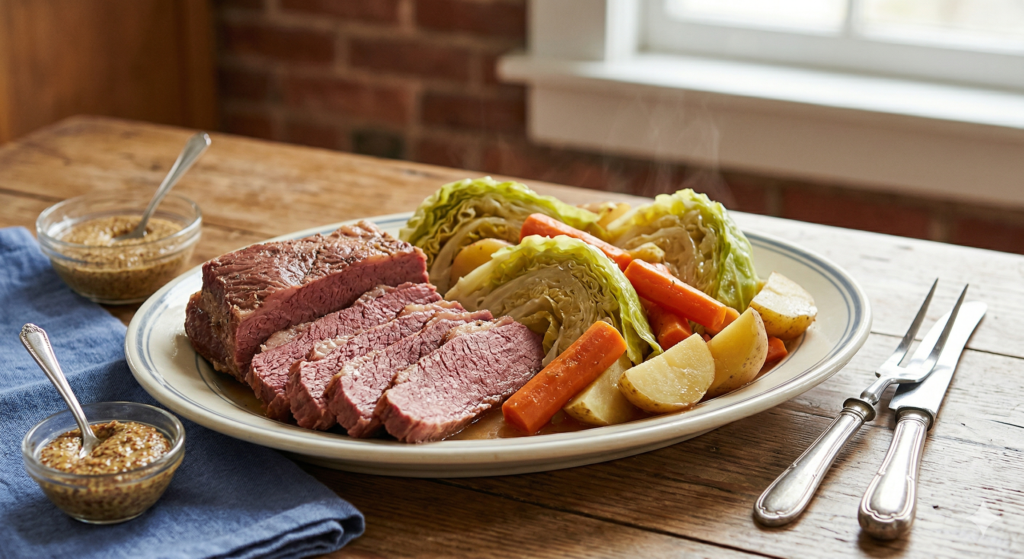
When the air turns crisp or St. Patrick’s Day approaches, few meals offer the same satisfying warmth and hearty flavor as traditional Corned Beef and Cabbage. This slow-cooked feast, featuring tender brisket, robust vegetables, and a distinctively savory broth, is a cornerstone of comforting, casual dining. While its roots are deep, this meal is universally beloved for its simple preparation and deeply rewarding taste.
This guide provides a straightforward method for achieving perfectly tender corned beef and flavorful vegetables every time. The secret, as with many great comfort foods, is patience—the low and slow approach allows the tough brisket to transform into melt-in-your-mouth perfection.
The Essential Components
The success of Corned Beef and Cabbage hinges on quality ingredients. Here’s what you’ll need:
- Corned Beef Brisket: The star of the show. You’ll find it in two varieties: “point cut” (more fat, often more tender) and “flat cut” (leaner, more uniform). Either works well, but a point cut will usually result in the classic flaky, incredibly tender texture. Tip: Always look for a brisket that includes the spice packet.
- Cabbage: A standard head of green cabbage is the traditional choice. Look for tight, heavy heads with bright color.
- Root Vegetables: Carrots and potatoes provide balance and sweetness. Use large, sturdy potatoes (like Russets or Yukon Gold) and substantial carrots that won’t turn to mush during the long cook.
- Aromatics: A large onion and a couple of cloves of garlic add foundational depth to the cooking liquid.
- Liquid: While water is standard, using some low-sodium beef broth can provide extra richness.
- Optional Enhancements: For deeper flavor, consider adding a splash of Guinness or another stout, a tablespoon of brown sugar, or even a few dashes of vinegar to the broth.
A Reliable Method: Step-by-Step Success
While exact cooking times can vary based on the size of your brisket, the method remains the same.
Ingredients (Estimated for 4-6 servings):
- 1 Corned Beef Brisket (approximately 3-4 pounds), with spice packet
- 1 large onion, quartered
- 2-3 cloves of garlic, smashed
- Water or low-sodium beef broth (enough to cover the brisket)
- 1 pound of large carrots, peeled and cut into substantial chunks
- 1.5 pounds of potatoes (Russet or Yukon Gold), scrubbed and cut into large chunks (or left whole if small)
- 1 medium head of green cabbage, cut into 6-8 thick wedges (core intact)
Instructions:
- Rinse and Cover: Remove the corned beef from its packaging. Give it a thorough rinse under cool running water (this helps reduce surface salt). Place the brisket, fat side up, in a large Dutch oven or heavy pot. Sprinkle the contents of the spice packet over and around the meat.
- Add Aromatics and Liquid: Arrange the quartered onion and smashed garlic around the brisket. Add enough water (or broth) to completely submerge the meat by about an inch.
- Bring to a Simmer: Place the pot on the stove and bring it to a boil. Immediate Step: Once boiling, immediately reduce the heat to low. This is critical. You want a very gentle, consistent simmer, not a vigorous boil. Cover the pot.
- The Long Simmer (Brisket): Let the brisket simmer gently. Plan on approximately 1 hour per pound. A 3-4 pound brisket typically needs 3 to 4.5 hours. Check the water level periodically and add more hot water if necessary to keep the meat submerged.
- Introduce the Root Vegetables: After the brisket has simmered for about 2.5 to 3 hours (when it is starting to become tender but still has some resistance), carefully skim any foam from the top of the broth. Add the prepared carrots and potatoes to the pot around the brisket. Continue simmering, covered, for about 30 more minutes.
- Add the Cabbage: When the carrots and potatoes are nearly tender (about 3.5 to 4 hours into the total cook time), add the cabbage wedges. Submerge them as best you can in the liquid, arranging them around the brisket.
- Final Finish: Cover and simmer for a final 15 to 25 minutes, until the cabbage is tender and the brisket is fork-tender (a fork will easily twist and shred the meat).
- Rest and Serve: Transfer the tender corned beef to a cutting board. Tent it loosely with foil and let it rest for at least 15 minutes before slicing. This is a non-negotiable step—resting locks in the juices. Use a slotted spoon to transfer the vegetables and cabbage to a warm platter. Slicing against the grain is essential for tenderness.
Serve with spicy mustard (like Dijon or grainy brown) and, if you like, creamed horseradish. Enjoy this classic, hearty feast!
Leave a Reply